

This week I went foraging for my winter wreath. My nearby woods are a mixture of indigenous, self-seeded and planted trees. The leaves have mostly dropped from the silver and downy birch, the hazel, rowan and beech. In any case, it was the greenery of conifers I was after. But the high branches of the Douglas fir and Scots pine were out of the reach of my secateurs.
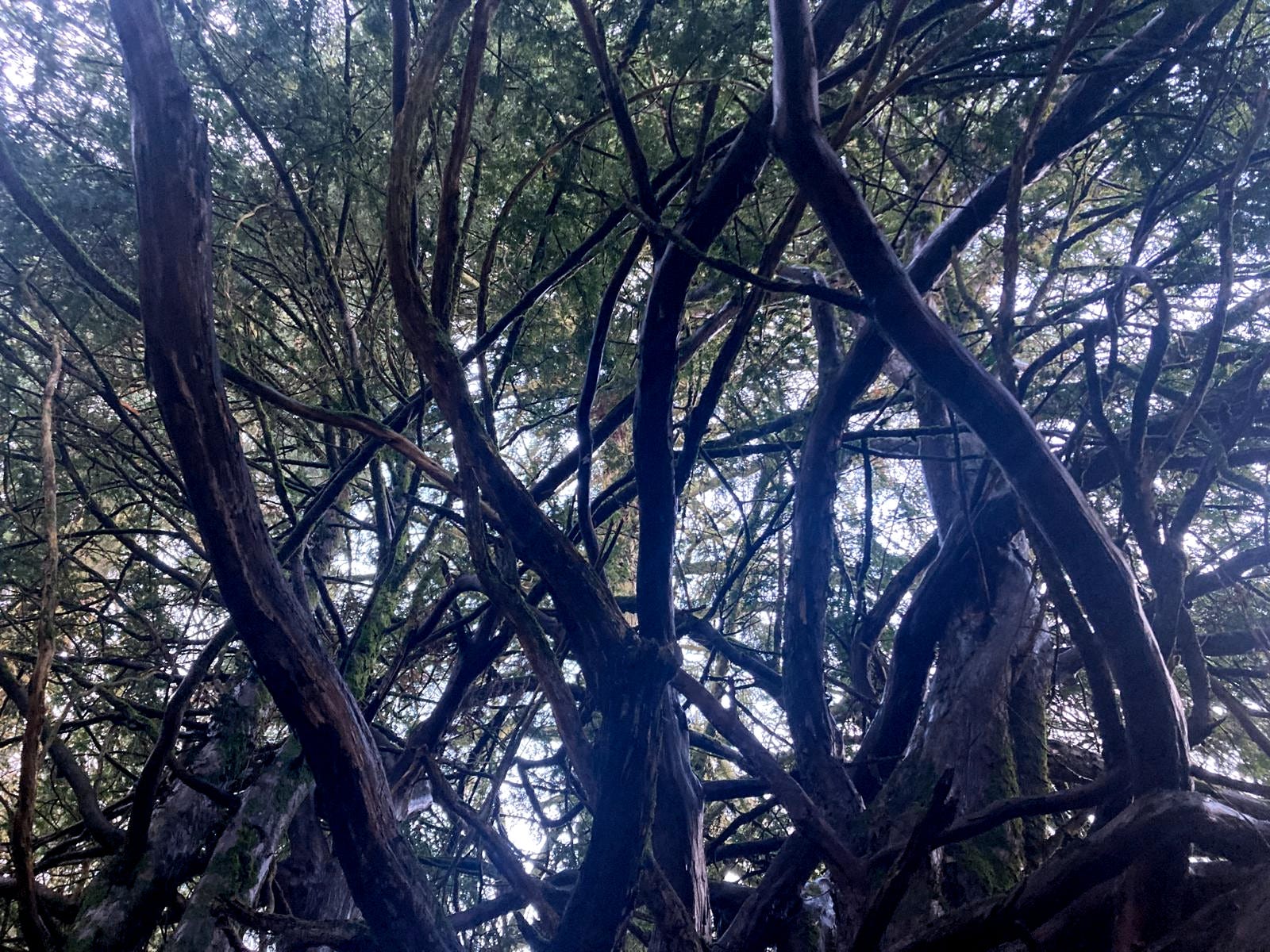
I was drawn instead to a small copse of yew.
It guards a tumbledown cottage, and is not far from a second copse that forms a sort of druidic circle. It’s all very fairytale. To heighten this feeling, the path I took is forbidden (jagged fencing at one end warns against trespassing).
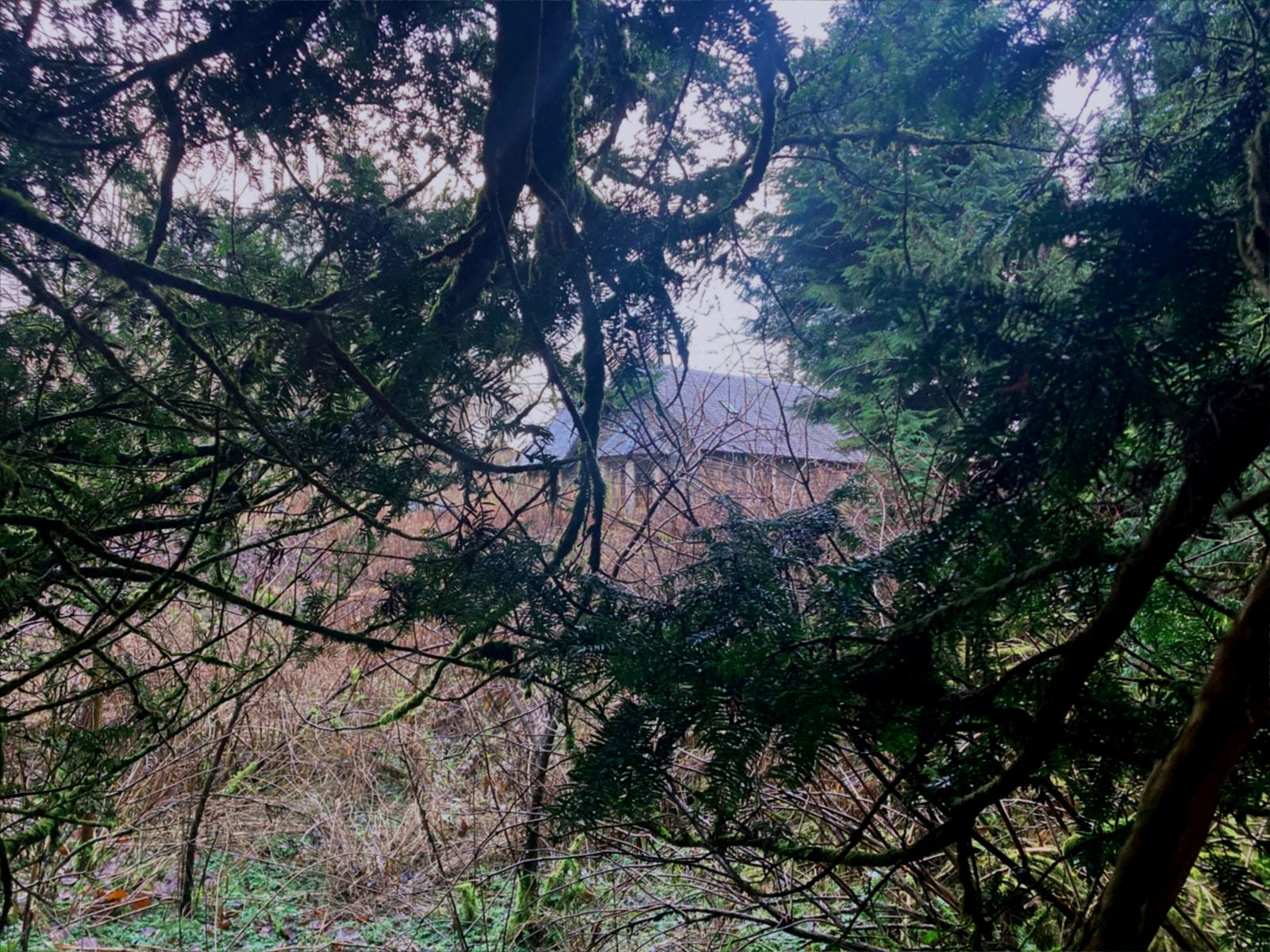
Now and then this year, I’ve wandered this way, to these trees. Sometimes to whisper to them, often just to sit awhile in their dark shadows.
Yews, after all, are quite magical…
A synergy occurs between the bark of the slow-growing Pacific Yew (Taxusbrevi folia) and fungus that grows on it. This relationship yields a certain sort of poison.
The poison is a molecule called Paclitaxel. Paclitaxel inhibits and damages the growth and structure of fast-dividing cells. In human bodies, cells that mutate to grow and divide quickly and uncontrollably are known as cancer.
The discovery that Paclitaxel can halt and even destroy some kinds of cancer was made in the late 1970s, and written up in Nature in 1979 by biochemist Susan Band Horowitz. It shouldn’t go unnoticed that this work was led by a woman. In December 1992, the US Food and Drug Administration licenced Taxol as a chemotherapy for advanced ovarian cancer, and two years later for metastatic breast cancer.
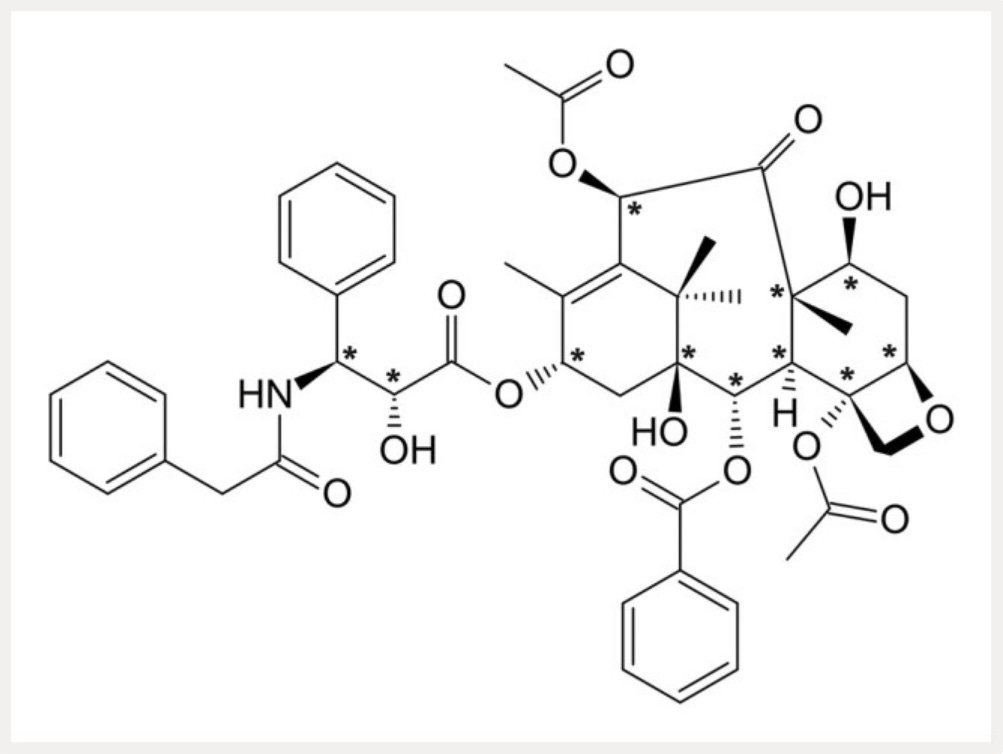
But the Pacific Yew, native to the fringes of North America, grows slowly; demand for the drug, meanwhile, was only climbing. When the threat of over-harvesting was swiftly recognised in the US Pacific Yew Act 1992, the quest was on to find different, sustainable ways to produce Taxol from cell cultures. In one of these methods, a ‘precursor’ is used: a compound in the needles of the European Yew (Taxus baccata). From this, a cytotoxic medicine called Taxotere (Doxetaxel) can be made. Both Doxetaxel and Paclitaxel are now frontline chemotherapy drugs.
This year, Paclitaxel was part of the anti-cancer regime that saved my life. It also made me feel indisputably poisoned.
Cancerous cells are not the only fast-dividing cells in our body. Our hair, fingernails and stomach lining grow quickly, too. Because Paclitaxel is a systemic drug, coursing through your whole body, many people using it experience hair loss, fingernail damage, and nausea. For me, these were a sign that the biochemistry — the scientific spell, the magic! — was at work.
And it worked.
I held this in mind while clipping sprigs from a yew felled by Storm Éowyn.
At this point I need to be clear: it is highly inadvisable to use yew to make a wreath. Its leaves, seeds, bark and roots contain another poison in the form of an alkaloid called taxine. As little as 60 grams of the plant could be fatal if ingested. I’ve bound my branchlets tightly, avoided the festive-red arils, and don’t have small children.
“Gall of goat, and slips of yew; slivered in the moon’s eclipse”
Ingredients in the witch’s cauldron, ‘Macbeth’, William Shakespeare
Stories and songs from Ancient Greece to Pagan Britain connect yew trees (often grown in or near graveyards) to death and necromancy; they also connect them to rebirth and transformation.
How fascinating that a plant which threatens life can also save it.
As I emerged from the copse into the lighter woodland, I noticed how bare and brown the ground is below the yew. The same is not true elsewhere. Walking the long way home, the forest floor was thick, damp and green with moss, mushrooms, and fern. I foraged for pine-cone decorations and later pinned them, with a tartan bow, to my wreath.

Thank you for reading, and thanks to my subscribers for the support you have given me in this most difficult of years. Warm festive wishes all round.
Brilliant writing about a subject so close to you, Joan. I learned things about yews! Amazing how nature is light and dark. Much like life itself. Beautiful wreath in it's contrasting chemistry🌲❤️🌲
What a great post! Thank you! We have a huge old yew next to our church. The kids are always climbing it! Gulp!