

The autumn leaves on my walk yesterday were crunchy with frost; today they are buried in snow. Can it really be winter? Time has behaved very oddly this year. Chemotherapy seemed endless, but then it was done; surgery loomed, but then I was in recovery; radiotherapy was toil, but now it is over.

I am reminded of a prescient phrase my community midwife used, after my first baby was born: “The days are long, but the months are short.”
At the end of most days of new motherhood, I was exhausted, but after 365 of them, it felt like I’d blinked and the baby I’d just birthed was blowing out his first candle. At the same time - looking back on the year - so much had unfolded.
If those baby and toddler days were pages in a book, most would be a heart-warming read. But many would be tear-stained, ragged at their edges, and difficult to get through. In test-question format, Marianne Levy brilliantly captured the paradox and tedium of such days in her memoir, Don’t Forget to Scream: Unspoken Truths about Motherhood: “It is 8am. You play peek-a-boo with your toddler for six hours. It is now 8.02am. Explain.”
I don’t mean to press a connection between new motherhood and breast cancer, but these are the two events in my life that altered, peculiarly and profoundly, my sense of time. In each, the effect was immediate.
With the first, I was at a newly painted guesthouse in the remote town of Serenje in Zambia. When the tell-tale lines appeared on the pregnancy test-stick, it wasn’t only the smell of emulsion that made me giddy. Time lurched. Within nine months, there would be a whole new person on the planet.
With the second - worlds and years away from that African road-stop - in a darkened ultrasound room, my radiologist told me gently but assuredly, “Unfortunately, it looks like cancer. I’m sorry.” Like shifting sands on a northern shore, time felt dizzying. How bad was it? That is, how much time would I have?
Chimamanda Ngozi Adichie puts it poignantly in a line in her latest novel, Dream Counts. ‘How swift the moment is when your life becomes a different life.’
During the ups and downs of new motherhood, the focus was on the future - so many possibilities! During this year of cancer treatment, the focus has been survival and taking one day at a time. As for November and December… they were so far ahead of me! So, how are we here? How can all those days have cartwheeled by? How can there be snow underfoot?
‘How swift the moment is when your life becomes a different life.’
Chimamanda Ngozi Adichie
Slowing time down as we age
Our perception of time is subjective, and many perceive that it accelerates as we get older. One explanation for this is that with every passing year, each year becomes a smaller fraction of our overall existence, so the older we get, the ‘shorter’ we imagine each year.
Another explanation, presented recently in the journal Communications Biology, is that, as we age, our brains tend to experience less neural activity when receiving information, simply because less of that information is made up of new ‘events’. To put it simply, processing new information requires our brains to work harder, which occupies more time. When our brains are not busy processing new information, short-term time (hours or a day) may seem to pass more slowly, whereas long-term time (months or a year) go fast.
You will know this yourself. If work is busy and family life or spare time is packed (in other words, if your neurons are kept active), days feel like they are flying by. When you look back, the year will be lengthened by all there is to look back on. If, however, work is slow and your spare time becomes predicatable (in a neural sense), days might drag. Looking back, the year - being emptier - will feel comparatively short.
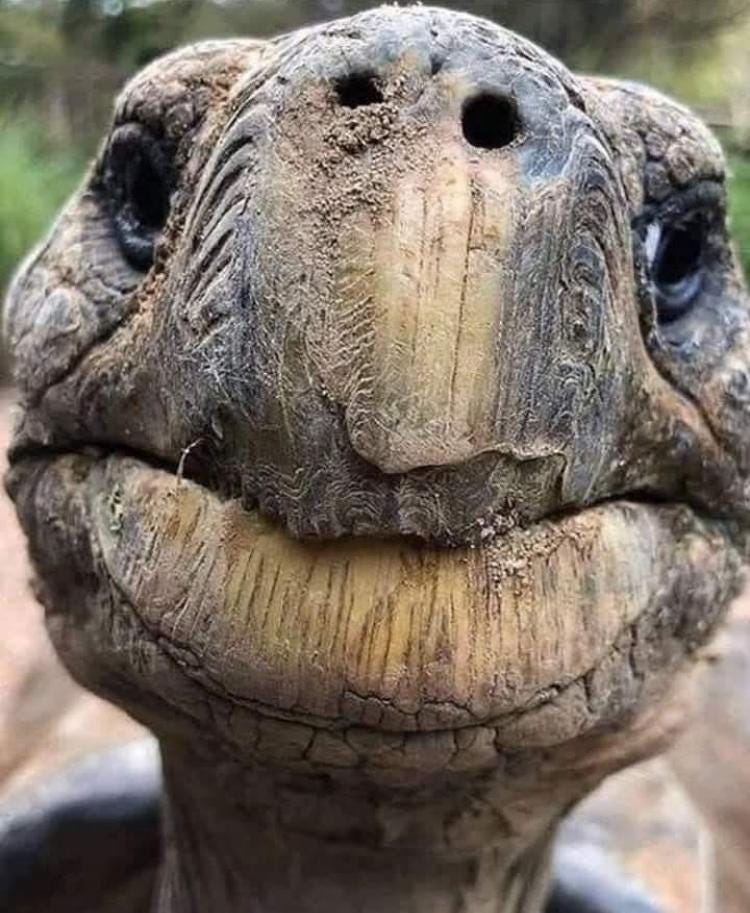
This may seem to contradict previous posts in The Slow Drift, where I have advocated doing less, not more. But the key, say the neuroscientists, is to consider the quality as well as quantity of what we do. By doing less of the repetitive, mindless stuff and more stuff that tickles our senses and excites our brain, we can change how we perceive time passing. By performing activities with greater purpose - which sometimes involves doing fewer things, more slowly - we can ensure that neither our days nor years will either drag or flit.
A quick note:
The studies I read for the above section all assumed that time is linear. In my co-authored non-fiction book Great Minds: 2500 Years of Thinkers and Philosophy, there’s a chapter on different ways of conceptualising time. Check it out!
By doing less of the repetitive, mindless stuff and more stuff that tickles our senses and excites our brain, we can change how we perceive time passing.
Slowing with clay
The week after radiotherapy, I did two art-and-nature-themed activities. I went, with my family, to Andy Goldworthy’s retrospective at the National Galleries Scotland. Art criticism is another enterprise at which I am slow: my initial, emotional response to a piece will often change over time or with new layers of story. A centrepiece of the exhibit was clay air-dried on a wall, summing up my parting thought that Goldsworthy’s work has a beautiful, unrushed aura.

And then with friends, I booked a session at March Hare Pottery. From the studio (a converted Victorian laundry house in the woods), to the medium and its tactility (lumps of cold, wet, gray clay), to the vocabulary (throwing, slabbing, trimming, pinching) — everything was new to me. It was three hours of tranquility, creativity and neural bliss. I got so much out of it that I have enrolled on an eight-week ceramics course. If you’re looking to slow down time, I highly recommend pottery!
One of the joys of working with clay is that it is a slow practice. A bit like the egg decorating I wrote about in the Spring, it can’t be rushed. On top of this, pottery teaches patience: it requires drying time, glazing, firing.
I look forward to sharing with you how my creations turn out when they emerge from the kiln. Among them is a dish I made for my oncologist. It seems now like such a small thing to offer in gratitude for her having saved my life, but it also feels fitting to give her something from the earth, made with my own two hands.
A Thanksgiving recipe
And while we’re on the subject of thanks… Thanksgiving is nearly upon us! We celebrate it annually - a feast of wild rice and cranberries, roast turkey, and candied yam, polished off with pumpkin pie and whipped cream. There is much to be thankful for this year in our household. Here is the recipe my husband uses for the perfect pumpkin pie.

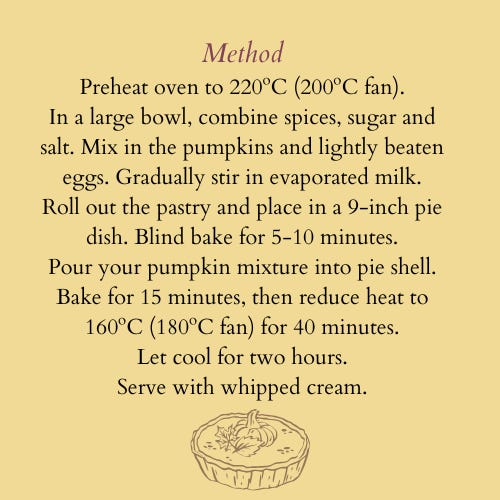
And this month, as a thank you for being here with me, all subscribers (free and paid) will be included in my Book Wild prize draw.

An old promise. A mysterious tiger. A magical adventure.
This month, my Book Wild giveaway is my own children’s novel, Tiger Skin Rug. It’s an adventure story with a dash of magic, for Middle-Grade readers (aged 8+). You can learn more about it here.
‘With its sensitivity, sincerity and touches of humor, Tiger Skin Rug is an excellent option for both independent readers and family read alouds’ — The Wall Street Journal
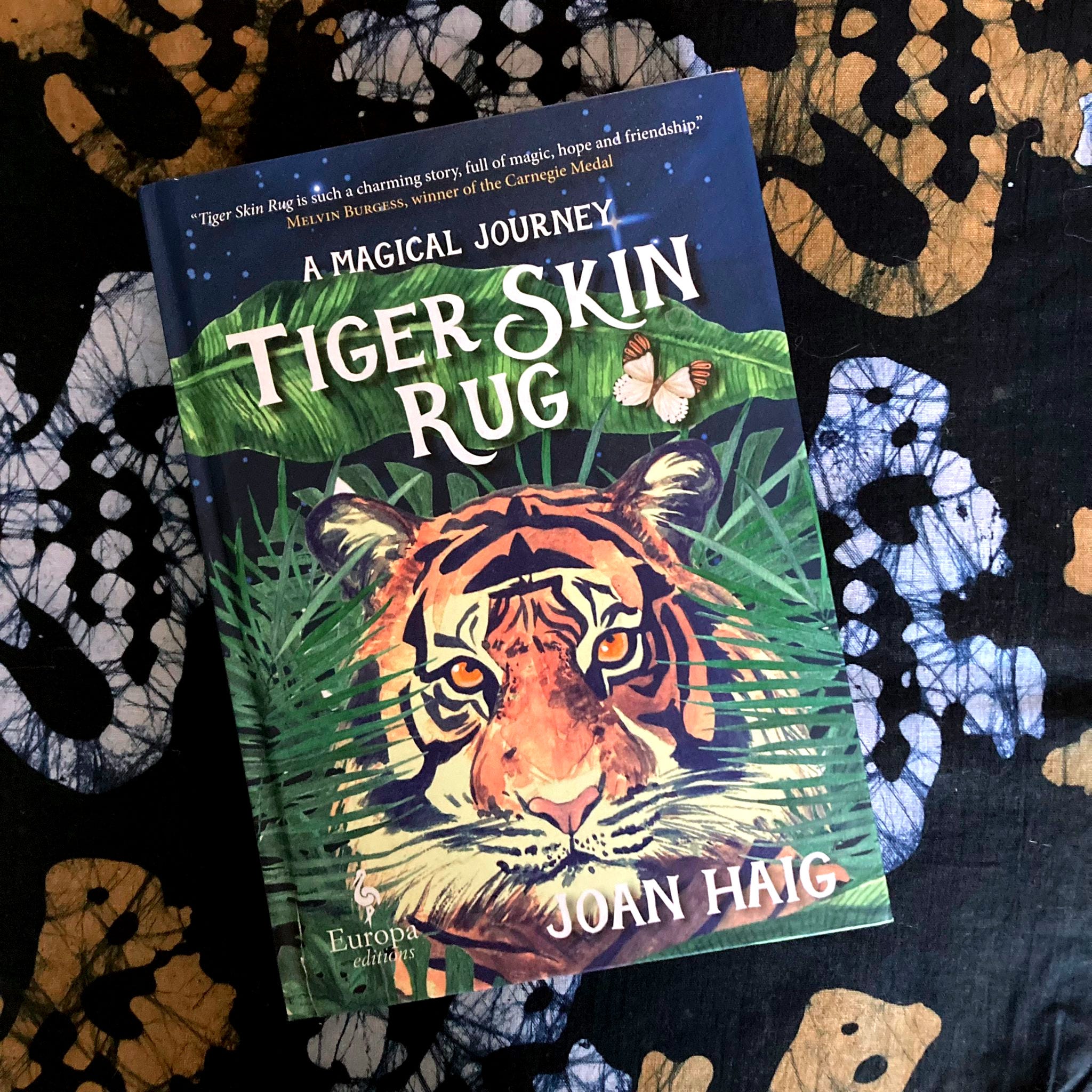
One lucky somebody will receive a signed, hardcover copy of the US edition and a matching postcard and bookmark. All you have to do is subscribe (or be an existing subscriber) to Notes from the Edge of the Herd. This month’s Book Wild giveaway is for all (free and paid) subscribers, and one name will be selected at random on November 28th, allowing toymaker elves to parcel the book and enchanted reindeers to deliver it in time for the festive season. Please subscribe and share! Until next time, thanks as ever for joining me on The Slow Drift.
I remember doing a pottery class in final year of school. It felt like it was outside time, compared to the rest of the school day. Such a calm interlude before returning to tests and deadlines. Now I'm moving house and looking through boxes of photos and diaries, which I don't often do, and I'm amazed at whole chunks of my life which I've forgotten. But I still remember those calm pottery sessions!
I find theories about the speed time passes so interesting. I heard a few years ago (from my mum who had heard a radio discussion!) that time seems to pass more slowly when we are laying down new memories, which is why it passes slowly for children and more quickly for adults. And that correlates with the theory you talk about. But also from what you say, each day will actually seem to pass more quickly for children, but has been slow when they look back ? Right? Fascinating!
Loved this post Joan, and can’t wait to hear more about the pottery classes xxx